
Blog
The Science of Aeration: Why Cream Charger Nitrous Oxide Size Matters for Texture

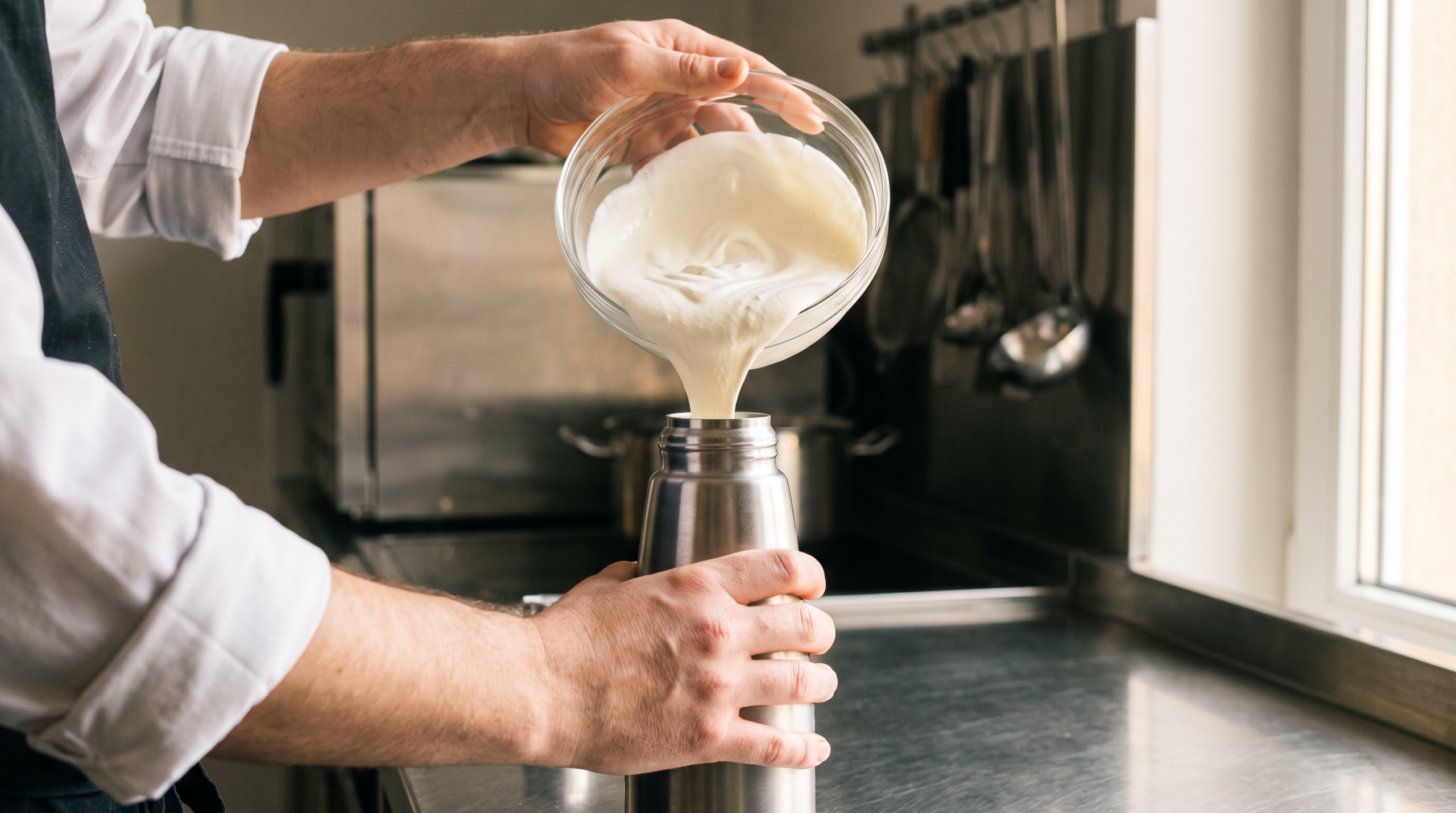
The gas inside a cream charger does far more than simply add bubbles — it fundamentally restructures the physical composition of any liquid it enters, and the size of the charger determines how consistently it can do that job.
To get cream chargers explained properly, it helps to start with the chemistry. Cream charger nitrous oxide, classified as E942 under food-grade standards, works by dissolving into fat molecules under pressure and then rapidly expanding as that pressure releases. The result is a foam structure that manual whipping simply cannot replicate. Pressurized N2O technology increases cream volume by up to 400% while maintaining structural stability — a figure that reflects not just convenience, but a measurable difference in yield and texture that matters enormously in professional kitchens.
Gas purity is the factor that most home users overlook. Food-grade N2O must maintain a minimum purity of 99.5% to prevent flavor tainting. Even minor impurities can introduce off-notes into delicate preparations — a critical concern when the dish is built around a subtly flavored cream or infused foam.
Pressure consistency is the less-discussed variable that separates reliable output from inconsistent results. In high-heat kitchen environments, temperature fluctuation affects how gas behaves inside the dispenser. A charger that delivers inconsistent pressure produces foam with variable density — sometimes too loose, sometimes over-aerated. That is why the volume and format of the charger you choose is not a trivial decision. Understanding what each size delivers, starting with the standard 8g format, is the foundation for making that choice intelligently.
The 8g Standard: When to Stick with Individual Cartridges
Getting cream chargers explained properly starts with the humble 8g cartridge — the format that defined professional whipping for decades and still holds genuine value in the right context.
The 8g charger operates on a straightforward mechanical principle. A threaded dispenser head punctures a foil seal at the charger’s tip as it is screwed into place, releasing a precise burst of nitrous oxide directly into the canister. That seal is single-use by design — once punctured, the cartridge is spent. The entire charge delivers in under a second, and the dispenser is ready to shake and dispense almost immediately.
Yield expectation: one 8g charger converts approximately 0.5 liters of liquid cream into 1.5 liters of aerated foam — a 3:1 expansion ratio that holds true across most standard fat-content creams. According to Miami Magic, this ratio is reliable enough that most recipes are calibrated directly around it.
Best For scenarios include:
- Home baking and pastry experimentation — small batch sizes align naturally with the single-charge format
- Low-volume cafes — operations serving fewer than 30–40 whipped portions per service
- Experimental plating — chefs testing infused foams or delicate mousses benefit from the controlled, per-use dosing
- Pop-up events — minimal equipment investment and easy portability
However, the 8g format reveals its limits quickly under commercial pressure. During a high-volume rush, a barista or pastry cook reloading individual cartridges every few portions loses meaningful time — time that compounds across a full service. The stop-and-swap rhythm disrupts workflow in ways that larger-format solutions are specifically built to eliminate. That efficiency gap becomes the central argument for exploring what scaled-up cylinders can actually deliver.
Scaling Up: The Efficiency of 640g Cylinders
Large-format N2O cylinders change the economics of professional whipping entirely — and the math alone makes a compelling case for high-volume operations.
A single 640g cylinder delivers the gas equivalent of approximately 80 standard 8g chargers, according to MonsterWhip’s volume data. For a busy café or dessert bar, that consolidation is significant. Instead of sourcing, storing, and disposing of 80 individual steel bulbs, your operation runs from a single pressurized tank that sits quietly under a prep counter and keeps output moving.
If you want to try the 640g format, we stock two options in our SmartWhip range: the steel Original and the Silver.
Reduced downtime is where large tanks earn their place on the service floor. With individual cartridges, staff must stop mid-service, unscrew the spent bulb, load a new one, and re-pressurize before the next dispense. Multiply that interruption across a busy Saturday brunch and you have a measurable drag on throughput. A 640g cylinder eliminates that cycle almost entirely. Understanding how to use whip cream chargers them at scale means recognizing that continuous flow is not a luxury — it is a baseline expectation in commercial kitchens.
Pressure consistency is a further advantage that often goes unmentioned. Individual cartridges can vary slightly in fill weight and release rate. A large tank, regulated properly, delivers a stable, uniform pressure across every single dispense. That uniformity translates directly into tighter texture control — which matters whether you are topping espresso drinks or plating high-end desserts.
Environmental impact adds a third layer to the argument. Eighty steel cartridges represent eighty separate steel components to manufacture, ship, and eventually recycle or discard. Consolidating that volume into one refillable or return-scheme cylinder reduces material waste substantially. For operations working toward sustainability targets, the shift to large-format tanks is one of the more straightforward changes available.
Of course, moving to this format is not simply a matter of swapping out cartridges. Large cylinders require dedicated hardware — regulators, compatible hoses, and dispensers built to handle sustained pressure — which is exactly where the next consideration comes in.
Hardware Requirements: Regulators and Dispenser Compatibility
Large-format N2O cylinders deliver serious output — but only when paired with the right hardware, because without it, pressure control becomes both a quality and a safety problem.
Understanding how to use whip cream chargers at scale starts with one non-negotiable piece of equipment: the pressure regulator. As noted by The Street Food Guy, large-format N2O tanks require a dedicated pressure regulator for safe and consistent dispensing. Without one, gas releases at full cylinder pressure, which overwhelms standard whipper valves, produces inconsistent foam, and creates a genuine risk of equipment failure.
Regulators step cylinder pressure down to the controlled range a commercial whipper is designed to accept — typically between 100 and 140 PSI depending on the dispenser model. A quality regulator includes a gauge so kitchen staff can monitor remaining gas without guessing.
Hoses and fittings connect the regulator to the dispenser head. Food-grade stainless steel braided hoses are the standard choice for commercial environments; they resist cracking under repeated pressure cycling and tolerate the cleaning chemicals used in professional kitchens. Aluminum fittings tend to corrode faster under those same conditions, which is why stainless steel hardware is strongly preferred throughout a high-pressure whipping setup.
Dispenser compatibility is where material choice becomes critical. Stainless steel whippers handle sustained high-pressure refills more reliably than aluminum models, which can fatigue at the valve seat over time. High-volume operations — bubble tea shops, pastry stations, and dessert bars — often configure a continuous refill setup, where a cylinder feeds a dedicated dispenser that stays charged throughout service. This eliminates the per-charger loading step entirely and keeps output consistent across hundreds of portions.
Getting the hardware right is the foundation. But equipment alone does not guarantee results — the way your team loads, operates, and maintains that setup determines whether you get perfect foam or wasted gas, which is exactly what the next section covers.
Operational Guide: How to Use Chargers Safely in a Professional Kitchen
Safe, consistent results with N2O depend less on intuition and more on repeatable process — and understanding the operational differences between 8g vs 640g N2O formats is where that process has to begin, long before you touch a whipper.
Proper technique is the difference between stable, voluminous foam and a disappointing, runny result. With a 640g cylinder, a regulator and hose system controls gas delivery before it ever reaches the whipper head. With an 8g charger, the cartridge is punctured directly into the dispenser on insertion. Both formats demand the same disciplined loading sequence — but the steps leading up to that moment differ depending on which system your kitchen runs.
Follow these steps for maximum yield:
- Chill your cream. Cold heavy cream (ideally 35°F or below) traps gas more efficiently. Warm cream disperses it.
- Fill to the max line only. Overfilling leaves no room for gas expansion, reducing output volume.
- Charge, then shake. Insert the 8g charger or open the regulator valve on a larger cylinder, seal the head completely, then shake firmly five to eight times.
- Dispense at the correct angle. Hold the whipper completely inverted. Any other angle wastes gas regardless of format.
Troubleshooting follows a short checklist. Gas escaping on insertion usually signals a worn head gasket — replace it immediately. Runny foam almost always points to under-chilled cream or insufficient shaking, not a charger defect.
Storage and disposal require equal discipline. Store pressurized cylinders upright, away from heat sources above 120°F, and never in direct sunlight. Spent 8g steel cartridges must be fully empty before disposal; many municipalities require them in metal recycling, not general waste. Larger cylinders should be secured upright with a bracket or chain to prevent tipping.
Cleaning should happen after every service session. Rinse the whipper body, head, and nozzle attachments in warm water, and use a thin brush to clear any residue from nozzle tips. Blocked nozzles are the most common cause of inconsistent output — and in a high-volume kitchen running a 640g system through dozens of portions per shift, a blocked tip mid-service costs more than just product.
Matching your cleaning and operational routine to your charger format is the natural next step — and that ultimately comes down to your actual service volume, which is exactly where format selection becomes most actionable.
The Bottom Line: Choosing Your Format Based on Service Volume
Matching your N2O format to your actual service volume is the single most reliable way to control costs, reduce waste, and protect output quality at every tier of operation.
The 8g vs 640g N2O debate ultimately comes down to one variable: how many portions you are producing per day. Get that number wrong, and you are either over-investing in hardware you do not need or burning through labor and consumables faster than your margins can absorb.
- Low Volume (1–10 desserts/day): Standard 8g chargers remain the practical choice. Overhead stays minimal, storage is simple, and there is no risk of gas sitting idle in a pressurized system between service periods. Freshness and flexibility outweigh any bulk-pricing advantage at this scale.
- Medium Volume (10–50 desserts/day): A 640g tank starts to pay for itself quickly. Fewer changeovers, lower per-liter cost, and a more consistent output pressure across a full service shift are all measurable gains for a mid-volume kitchen.
- High Volume (50+ desserts/day): Large cylinders on a dedicated regulator system, with a spare kept ready, deliver the strongest ROI. The upfront investment is offset rapidly by reduced labor time and substantially lower gas costs per unit of output.
Quality check: Regardless of which format you select, always verify that your N2O meets a minimum purity threshold. Whip Champion notes that premium culinary gases often reach 99.9% purity to ensure the gas is odorless and flavor-neutral — a standard that applies equally to a 8g cartridge and a commercial cylinder. Do not allow a focus on volume economics to push purity verification to the back of your checklist.
Choosing the right format is only part of the equation. Sustaining that choice over time — through consistent supply, predictable pricing, and a supplier relationship that scales with your menu — is what separates a one-time equipment decision from a long-term operational advantage.
Future-Proofing Your Kitchen with N2O Cream Chargers
Choosing the right N2O charger size is ultimately a strategic decision — one that shapes your cost structure, your service consistency, and your kitchen’s capacity to grow. Your charger format should match your peak-hour demand, not your average throughput. This is the central principle that separates kitchens running efficiently from those absorbing avoidable waste and mid-service shortfalls. Average demand is a useful baseline, but it is peak demand that determines whether your team can execute without interruption on your busiest covers. Understanding whip cream chargers how to use them at scale — from loading sequences and pressure management to cleaning routines and storage protocols — allows your team to extract maximum yield from whichever format you choose. That operational fluency compounds over time: staff who know the process cold make fewer errors, waste less gas, and maintain output quality even during high-pressure service windows. A reliable B2B supplier is what makes this strategy sustainable over time. Sporadic restocking from retail channels introduces price volatility and supply gaps that undermine even the most carefully planned kitchen operation. Working with a specialist in bulk gas distribution — one that understands the intersection of culinary technology and high-volume service — gives you predictable pricing, consistent gas quality, and the supply continuity your menu depends on. That consistency directly supports smarter menu planning, since chefs can commit to N2O-dependent preparations without hedging against stock uncertainty. If your current setup still relies on standard 8g chargers across all applications, now is the time to evaluate where that format is costing you. Audit your waste, calculate your peak-hour consumption, and explore high-capacity solutions that align with your real operational demands.
One thought on “The Science of Aeration: Why Cream Charger Nitrous Oxide Size Matters for Texture”