
Blog
The Operational Case for Advanced Infusion in Commercial Kitchens

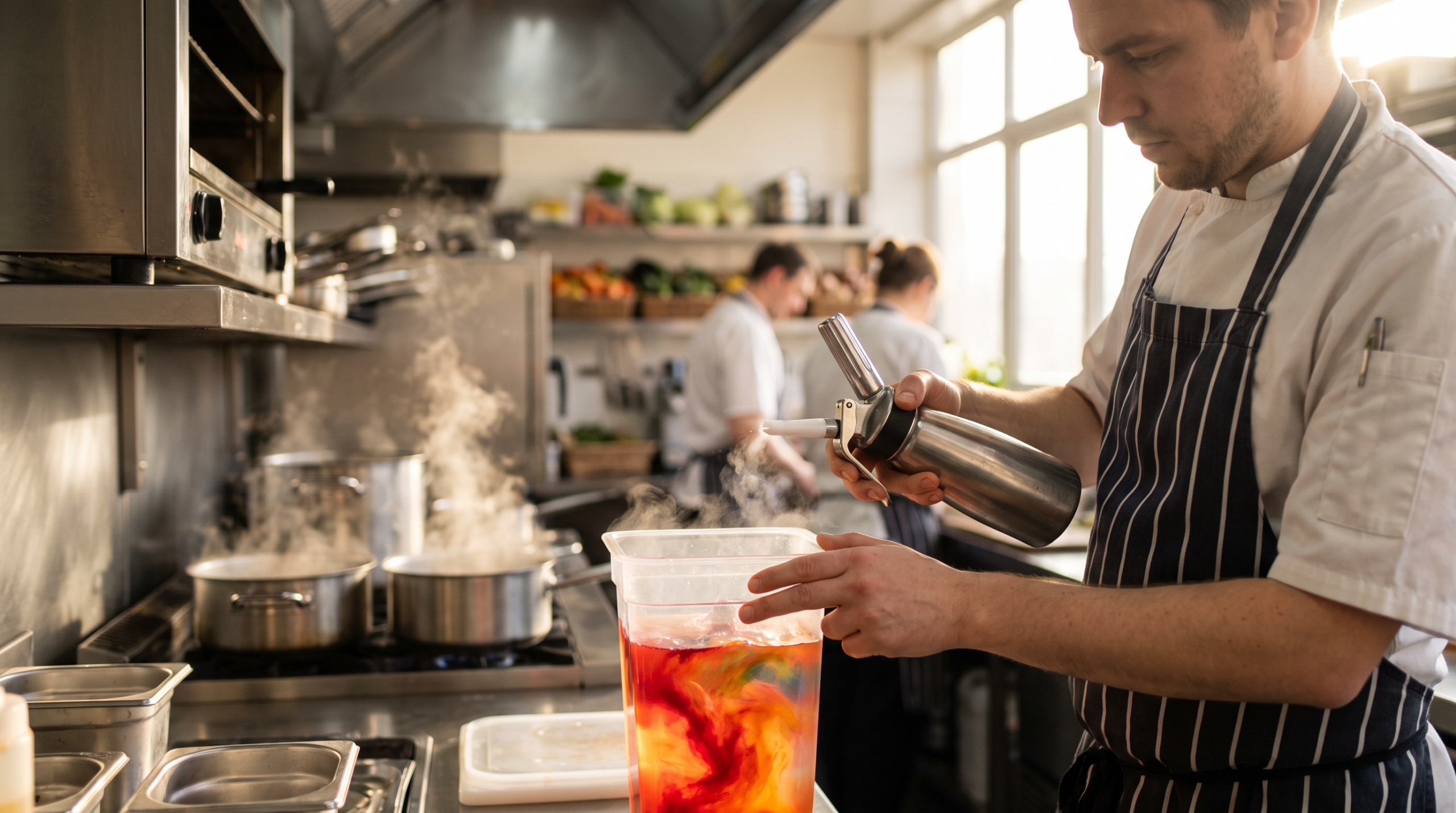
Every serious kitchen is chasing the same impossible target: flavors that take days to develop, delivered in minutes, at scale. That tension is no longer a creative problem — it is an operational one.
Traditional infusion methods are quietly becoming a liability in high-volume service. Maceration and sous-vide techniques produce exceptional results, but they demand hours or days of passive prep time, locking up valuable inventory and refrigeration space in the process. For a kitchen running lean — fewer cooks, tighter margins, smaller footprints — that kind of overhead is difficult to justify.
The commercial pressure is real. Labor costs across the restaurant industry have climbed steadily, and operators are responding by restructuring prep workflows around efficiency without sacrificing the complexity that differentiates their menus. Culinary innovation, in this context, is no longer defined by what a chef can create given unlimited time. It is defined by what can be delivered consistently, at volume, with the same depth of flavor a guest expects from a tasting menu.
This is precisely where rapid nitrous oxide infusion has moved from novelty to necessity. As Rapid Infusion 101 explains, pressure forces flavor into the pores of a solid ingredient, and the release of that pressure draws aromatics back out — extracting in seconds what traditional methods take hours to achieve. The siphon, long relegated to tableside foam presentations, is now better understood as a pressurized extraction vessel — and a serious production tool for kitchens that need food-grade N2O on hand as a core ingredient, not an afterthought.
Understanding why that extraction works so effectively requires a closer look at the chemistry behind the process.
The Science of the Siphon: How N2O Redefines Flavor Extraction
Rapid N2O infusion works because nitrous oxide is unusually soluble in fats and liquids, making it an effective solvent when held under pressure inside a siphon.
Pressure forces flavor compounds deep into a porous ingredient’s cellular structure. Then, when you release that pressure, something equally important happens: the sudden drop draws bubbles and liquid back out of the solid ingredient, pulling aromatics with them. As Rapid Infusion 101 explains, this back-and-forth extraction captures aroma and flavor fast — no heat required, no lengthy wait.
That “no heat” detail matters enormously in a professional kitchen. Heat-based infusions degrade volatile aromatic compounds — the delicate terpenes in fresh herbs, the bright notes in citrus zest. N2O operates at ambient temperature, preserving exactly what makes a Meyer lemon or tarragon worth using in the first place. The result is a cleaner, truer flavor profile than most traditional methods can achieve.
Aeration is the second functional advantage. When N2O is incorporated into a fat-based liquid, it creates stable savory foams that enhance flavor intensity without the heaviness of cream or butter in volume. A consommé foam, an herb oil espuma, a miso air — each delivers concentrated taste with structural lightness that plating and portioning demand at scale.
For kitchens evaluating the real operational limits of this technique, the next question becomes one of throughput. A single siphon charged with a standard charger handles small batches cleanly, but high-volume prep environments require a different approach entirely — and that is where 640g N2O cylinder efficiency for high-end kitchens begins to separate serious operations from the rest.
Scaling Innovation: From 8g Chargers to 640g Cylinder Efficiency
High-volume kitchens need industrial-grade tools, and the gap between boutique chargers and professional cylinder systems is wider than most operators realize.
The 8g charger was never designed for production-scale work. In a prep-heavy environment, each small charger delivers a single charge before it is spent — meaning a cook working through 20 liters of savory sauce base is constantly stopping to reload, introducing pressure variation between batches and slowing the entire station. The cumulative waste in both labor time and consumable cost adds up quickly, and inconsistency in N2O pressure directly affects texture and aeration quality across what should be identical preparations. For kitchens deploying molecular gastronomy aeration tools as part of a daily menu — not an occasional tasting menu trick — that friction is unsustainable.
The 640g cylinder solves this by maintaining a continuous, regulated pressure supply across multiple batches without interruption. Professional-grade N2O solutions using cylinders of this scale can increase cream volume by up to 400% while delivering the kind of batch-to-batch consistency that a service environment demands. That consistency matters especially for savory sauces, where pressure variation changes mouthfeel and emulsion stability in ways that are immediately noticeable on the plate.
The cost-benefit case for bulk N2O is straightforward for large restaurant groups and high-end catering operations:
- Reduced per-unit cost — bulk cylinder pricing significantly lowers the N2O cost per liter compared to single-use chargers
- Labor efficiency — fewer interruptions during prep service means faster throughput at high-demand stations
- Consistent pressure output — stable pressure across the full cylinder volume eliminates batch variation in foams, sauces, and infusions
- Lower waste footprint — fewer spent units to dispose of compared to high-volume charger use
For catering operations serving several hundred covers, or restaurant groups running identical menus across multiple locations, that operational reliability is not a luxury — it is a baseline requirement. The shift to cylinder-based systems is ultimately what allows the rapid infusion techniques covered earlier to move from the test kitchen into everyday production. And once that infrastructure is in place, the range of applications expands considerably — well beyond cream and dessert work, and deep into savory territory.
Advanced Savory Applications: Moving Beyond Whipped Toppings
Rapid N2O infusion has quietly reshaped the savory kitchen, moving well past dessert toppings into territory that challenges traditional sauce work, preservation, and beverage programs.
Infused Liquids. The siphon’s most immediate savory impact is on liquids that would otherwise require days of maceration. Rapid-infused oils and vinegars — a blueberry balsamic being a standout example — can be ready in minutes rather than the traditional two-week wait. Because no heat is applied, delicate aromatic compounds in fresh herbs and fruit remain intact, preserving both color and flavor integrity. Kitchens running high volume nitrous oxide canisters for restaurants can produce these finishing liquids in continuous batches without interrupting service flow.
Savory Foams. Lightweight espumas made through N2O aeration offer a compelling alternative to butter-mounted or cream-heavy sauces. A well-charged siphon can transform a roasted vegetable purée or a dashi base into a stable, airy foam that delivers concentrated flavor without the weight. The result is a dish that reads as refined but is more cost-effective per portion. And for chef-driven cocktail programs, this same principle extends to instant bitters and tinctures that collapse a week of infusion into a single pressurized cycle.
Flash Pickling. Perhaps the most technically interesting application is using the pressure-and-release mechanism to force acidity into raw vegetables in seconds. The N2O cycle drives the pickling liquid deep into cellular structure, delivering sharp acidity while the vegetable retains its snap — something a prolonged brine simply cannot replicate. This technique opens the door to composed plates where pickled elements feel genuinely fresh rather than processed. As kitchens begin pairing these rapid techniques with longer, slower cooking methods, the question naturally becomes how N2O infusion fits within a broader modernist toolkit.
The Modernist Toolkit: Integrating Siphons with Sous Vide and Cryogenics
Modernist cuisine techniques reach their full potential when tools work in concert — and the N2O siphon sits at the center of that synergy.
The siphon is the most accessible entry point for any kitchen moving toward modernist methods. It requires no dedicated plumbing, no steep learning curve, and no prohibitive upfront cost. Where sous vide locks in precise temperature control during cooking, rapid N2O infusion finishes the flavor profile at the point of service — layering aromatics that heat-based cooking would otherwise diminish. A protein slow-cooked at 140°F for two hours can be elevated with a finishing oil infused in seconds, preserving volatile compounds that a traditional reduction would sacrifice entirely.
“The siphon changed how I think about sequencing. Sous vide gives me control over texture; the siphon gives me control over the final aromatic hit. Together, they close the gap between precision cooking and expressive plating.” — Executive Chef, contemporary tasting menu restaurant
The intersection of hydrocolloids and aeration adds another layer of possibility. Stabilizers like methylcellulose or lecithin allow foams to hold structural integrity across a long service window — something unachievable with standard cream alone. As Advanced Contemporary Cuisine & Technique programs at ICE illustrate, combining aeration science with binding agents is now considered foundational, not experimental.
And when liquid nitrogen enters the toolkit alongside N2O, texture play expands further still. Rapid chilling with liquid nitrogen can set a siphon-aerated mousse almost instantly, creating contrasts — warm foam against a frozen core — that define contemporary tasting menus. These combinations demand operational discipline, but the results are measurable in guest experience and menu differentiation. Understanding how each tool contributes its distinct function is precisely what the next section distills into actionable guidance for kitchen managers.
The Bottom Line: Key Takeaways for Kitchen Managers
Understanding the science of the siphon is not just an academic exercise — it is the operational edge that separates high-margin kitchens from those perpetually losing ground to prep costs and inconsistency.
Rapid infusion compresses days of prep into seconds. Traditional cold infusions tie up cold storage for 24 to 72 hours while locking capital into ingredients that cannot yet be used. N2O-driven extraction eliminates that lag entirely, freeing both shelf space and cash flow in a single workflow change.
Aroma preservation is a measurable competitive advantage. Heat-based extraction degrades volatile aromatic compounds — the very notes that make a dish or cocktail memorable. As techniques documented at culinary technology facilities confirm, pressure-based infusion captures those delicate top notes intact, producing results that cannot be replicated with a saucepan.
Cylinder format directly affects service reliability. Transitioning to 640g cylinders delivers the consistent, regulated pressure that high-volume service demands. And according to N2O Cream Chargers brand context, professional N2O systems can generate significant cost savings for high-volume kitchens by simultaneously reducing labor overhead and increasing yield per preparation cycle.
The bottom line for any kitchen manager is this: modern culinary innovation only delivers ROI when avant-garde technique meets operational discipline. Creative results mean nothing if they cannot survive a 12-hour service shift at scale. The sections ahead will show you exactly how to build that infrastructure.
Standardizing Innovation: Implementing N2O Systems in Your Line
True culinary innovation does not happen by accident — it happens when kitchen managers replace guesswork with systems that are built to perform under pressure, shift after shift.
Audit your prep workflow first. Before purchasing a single additional charger, map your current infusion prep and identify where time is costing you the most money. A station that spends 45 minutes steeping herb-infused oils overnight is a station that cannot quickly respond to a depleted batch during service. Time-cost analysis is the starting point, not an afterthought. In practice, kitchens that conduct this audit often discover that two or three high-frequency applications account for the majority of their prep bottleneck.
Start with high-impact, low-waste applications. Herb-infused oils, cocktail bitters, and aromatic broths are ideal entry points because ingredient waste is minimal and the flavor payoff is immediate and measurable. These applications also allow your team to build confidence with the technique before scaling into more complex preparations. As culinary research indicates, bold, layered flavor profiles are driving guest expectations upward — and rapid infusion is one of the most direct ways to meet that demand.
Invest in hardware built for volume. A siphon that performs well during a 30-cover dinner service will behave very differently across a 12-hour shift serving 200 covers. Professional-grade equipment tolerates repeated pressurization cycles, temperature variance, and the physical demands of a busy line. And hardware is only half the equation — consistent charger supply is the other. N2O Cream Chargers specializes in pressurized gas solutions ranging from 8g to 640g+ canisters, ensuring wholesale reliability as an operational standard rather than a luxury. A dependable supply partner is not optional — it is the infrastructure that keeps innovation on the menu.
Ready to standardize your infusion program? Contact N2O Cream Chargers directly for wholesale pricing and volume consultation.
2 thoughts on “The Operational Case for Advanced Infusion in Commercial Kitchens”